By Miles Layton
Scrolling through my phone – trying to find a video of Tangier to give me peace at the end of the day – I came across a documentary, maybe three or four years old, that featured Allen Parks. Maybe give this video a view.
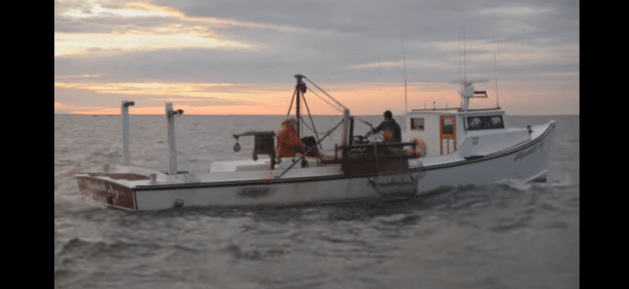
From the video — before dawn lifts over Tangier Sound, Parks is already on the water, doing what his family has done for centuries. In Coastal Queen’s YouTube documentary “Tangier and the Last Buyboat,” Parks stands at the center of a story about oysters, heritage, and a disappearing way of life.
The day begins in rough conditions. “Where was I? That’s was awful up there where I was at work,” one waterman says in the film.
Another adds, “Yeah, I weren’t in no hurry no way. I knew, I knew flood tide would be going where the wind’s at. My wind gauge has been going 15 to 20 or better all morning.”
“Yeah, it was definitely that up there,” a third voice responds. “I’m sure that’s flood tide, but that flood tide was still strong up there, I’m sure.”
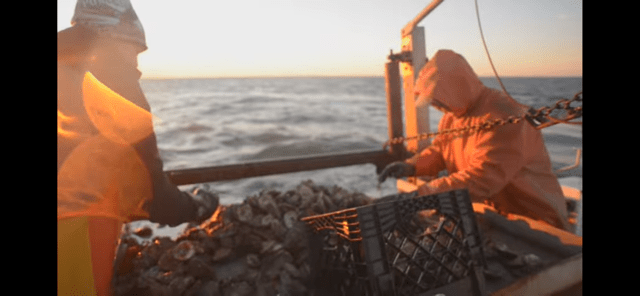
Despite wind and current, Parks and his fellow watermen press on. The documentary explains, “The watermen from Tangier leave the dock well before sunrise to make it out to the oyster grounds. By law, you must wait until the sun rises above the horizon to start harvesting oysters.”
“The Chesapeake, especially the Tangier Sound, are ripe with oysters,” the narration continues, drawing watermen from across Virginia’s Eastern Shore.
For Parks, this season has been especially rewarding. “This oystering season has been the, been the best year by, by far,” he says. “Last year was very close to this year, where there’s just a huge abundance of oysters.”
The abundance has reinforced his love for the work. “If I could do this the rest of my life like I’m doing today, I’d oystering the rest of my life,” Parks says. “It’s just too easy.”
The film notes that Parks “has been working on the water in some form since he was 15 years old,” but his connection to the bay started much earlier.
“I’ve been, you know, following my dad around as, as a young child on the boat,” he says. “Been doing this since a small child.”
His own children are now learning the same lessons. “I have an eight-year-old (Jacob, now 10 or 11). He’s been on my boat off and on since he was in kindergarten,” Parks says. “The first time he went out crab potting with me… it was two days before he went to school in kindergarten. We start that young.”
For Parks, the work is inseparable from family history. “My last name is Parks, and they moved to Tangier,” he explains. “The first Parks family moved to Tangier during the mid-1700s. And so you can trace my family on back to that, and we’ve all been watermen.”
“Dad was a waterman from a child. His dad was a waterman,” he adds. “Lord knows how many generations that is.”
Still, Parks acknowledges that the tradition is shrinking. “We are getting fewer in number,” he says. “Most people now are going, doing other things.”
The film shows Parks and his crew working the oyster grounds, following a precise routine. “When we get to the oyster grounds, we call it the rock,” one waterman explains. “We drop the drudge in the water… we’re culling, picking through the oysters… and we keep the big stuff.”
Each boat, the documentary notes, is limited to 16 bushels per day.
“The oysters are monstrous. They’re huge,” the same speaker says. “They’re flourishing.”
Much of Parks’ livelihood depends on the Delvin K., the last working buyboat on the Chesapeake Bay. “About a dozen or so make the journey back to Tangier Island to sell their oysters,” the narrator explains.
“The Mobjack is still working… but it doesn’t buy the wild-caught oyster,” Parks says. “So that makes the Delvin K… the last buyboat buying oysters on the Chesapeake Bay now.”
After harvesting, the oysters are sent to market. “My uncle’s gonna take these to Reedville,” one family member explains, “and they will be shoveled out… and dumped in a tractor trailer.”
For Parks, the work is about more than a paycheck. “There’s- the only options for work on Tangier are commercial fishing,” another resident says in the film, underscoring how central watermen remain to island life.
As wooden buyboats and traditional fisheries struggle to survive, Parks continues to rise before sunrise, guided by tides, weather, and generations of experience.
“If I could do this the rest of my life,” he says, “I’d oystering the rest of my life.”
In “Tangier and the Last Buyboat,” Allen Parks emerges not just as a working waterman, but as a living link between Tangier’s past and its uncertain future.
Here’s a more recent story about Parks — Faith, Family, and the Sea: The Divine Journey of Allen Parks and His Restored Lobster Boat.
Subscribe — it’s free! And you’ll get important news updates about Tangier Town Council and happenings on the island.
 Tangier Island, Virginia